
Designing a small kitchen requires thoughtful planning, especially when it comes to cabinetry. In compact layouts, every inch matters, and the right cabinet choices can dramatically improve how the space functions and feels. Smart small kitchen cabinet ideas do more than simply add storage — they influence workflow, organization, aesthetics, and the overall sense of openness in the room.
Homeowners today want kitchens that are both beautiful and practical, even when square footage is limited. This is where strategic cabinetry transforms a tight layout into a highly efficient space. Whether you're dealing with a galley kitchen, an apartment-sized layout, or a cozy kitchenette, the right cabinet solutions help make the room more functional while maintaining style.
In this comprehensive guide, we explore some of the most effective small kitchen cabinet ideas to maximize storage space. From vertical cabinetry to corner solutions, pull-out systems, and custom craftsmanship, you'll discover how each strategy contributes to a more organized and visually appealing kitchen.
Best Small Kitchen Cabinet Ideas to Maximize Storage
1. Vertical Cabinets and Floor-to-Ceiling Storage
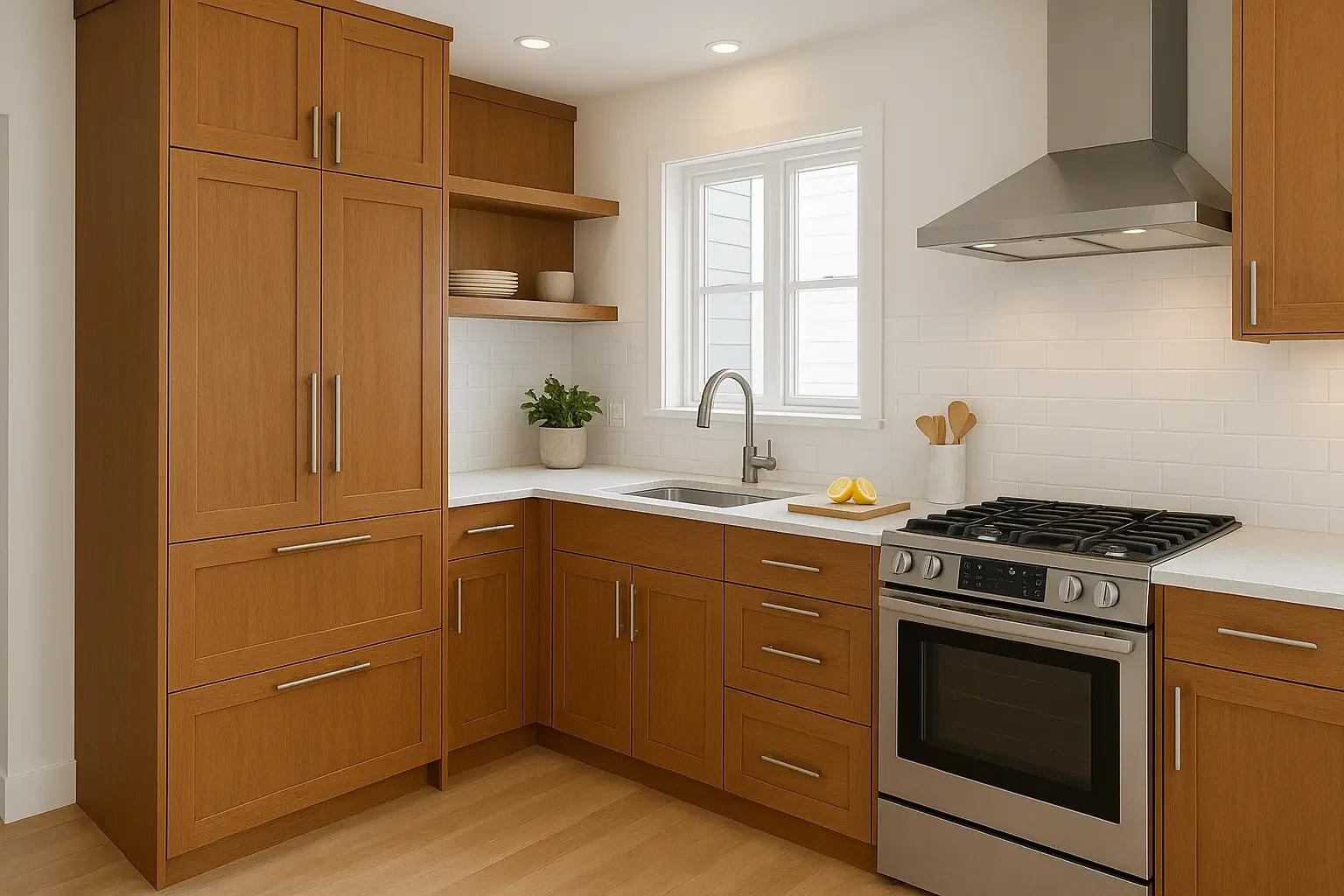
One of the most powerful ways to maximize a small kitchen is by expanding upward. Walls often hold untapped potential, and tall cabinets allow you to take advantage of unused vertical space. Floor-to-ceiling cabinetry can store everything from pantry staples and small appliances to infrequently used tools or seasonal dishware.
Vertical storage ideas not only maximize functionality but can also help draw the eye upward, which may create the perception of added height in some small kitchens. This makes them especially effective in galley kitchens, narrow layouts, and apartments where floor space is limited.
Tall cabinets help reduce visible clutter by providing more closed storage, decreasing the need to keep items on countertops or open shelves. They also support a cleaner visual flow, allowing the kitchen to feel more streamlined and intentional.
2. Slim Pull-Out Cabinets
Slim pull-out cabinets are one of the most effective small kitchen cabinet ideas for utilizing narrow or awkward gaps between appliances. These slender units typically measure between three to nine inches wide, depending on manufacturer specifications and available space. Their narrow design hides spices, oils, jars, cleaning products, and other small essentials in an organized way.
Because pull-outs bring the stored items forward, you eliminate the problem of digging through a cluttered cabinet. Everything stays neatly arranged and easy to reach, which increases functionality in tight kitchens.
Slim pull-outs are especially valuable in kitchens where space is too limited for traditional cabinets, making them a smart way to create storage from previously unused areas.
3. Overhead Cabinets to Expand Storage
When storage is limited, extending cabinets closer to the ceiling can make a meaningful difference. Overhead cabinets provide valuable space for items that you don’t need on a daily basis, such as seasonal cookware, specialty serving pieces, or backup pantry goods.
Using small upper cabinet ideas not only increases storage but also helps open the kitchen visually when done correctly. Lighter colors — such as soft whites or pale neutrals — keep the space from feeling too enclosed. Pairing overhead cabinets with under-cabinet lighting also improves visibility on the countertops, enhancing usability and ambiance.
4. Corner Cabinets with Space-Saving Hardware
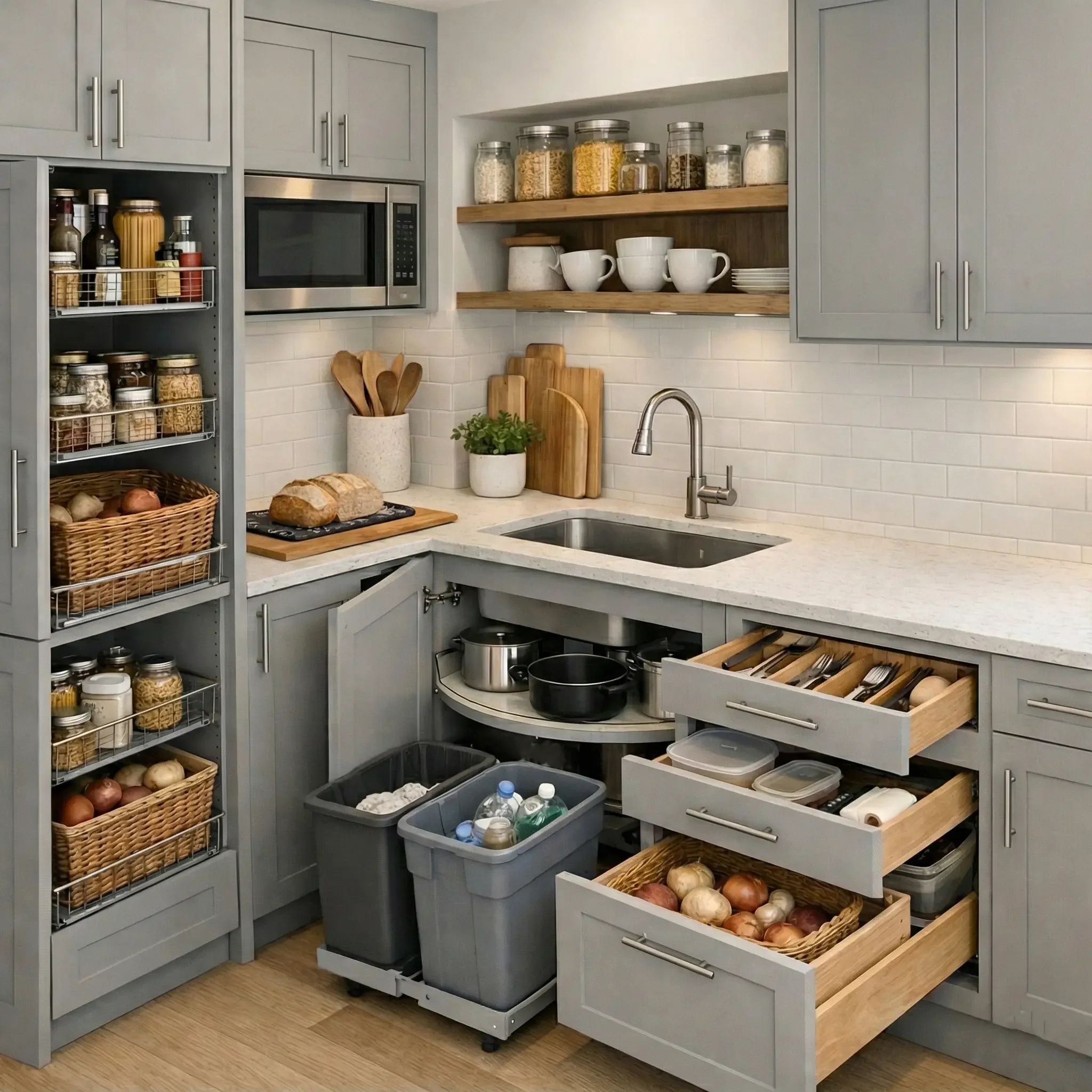
Corners are often the most underutilized areas in small kitchens, but modern corner storage solutions turn them into highly functional zones. Corner cabinets equipped with specialized hardware make it easier to access deep areas that would otherwise become clutter traps.
Options include:
Lazy Susans: Rotating trays that improve access to pots, pans, and pantry items. These come in full-circle, half-moon, or kidney-shaped designs.
Blind Corner Pull-Outs: Mechanical systems that slide out and over, allowing you to reach items stored in the back portions of the cabinet.
Corner Drawers: Angled drawers that offer better accessibility compared to fixed-shelf corner cabinets.
Corner solutions are perfect for L-shaped and U-shaped layouts, where strategic corner use can significantly increase storage capacity.
5. Open Shelving for Airy, Accessible Storage
Open shelving is a popular choice in small kitchen designs because it reduces the visual weight of upper cabinetry and can contribute to a more open feel when styled intentionally. By eliminating solid doors, open shelves help preserve sight lines, which makes compact kitchens feel brighter and more spacious.
This type of shelving works especially well for storing everyday dishes, glassware, or decorative items that you want within easy reach. It also pairs beautifully with traditional cabinetry, striking a balance between practicality and aesthetic appeal.
While open shelves are airy and accessible, they require consistent organization. Keeping them tidy ensures the kitchen feels harmonious rather than cluttered.
6. Under-Sink Organizers and Pull-Out Systems
The area beneath the sink is one of the most challenging spaces to organize due to plumbing and irregular shapes. Under-sink organizers solve this problem by using partitions, sliding trays, or tiered pull-outs to create function where chaos once existed.
Pull-out bins and cleaning caddies help contain items that would otherwise spill out or get lost in the back of the cabinet. Tiered organizers maximize the vertical space, allowing room for both cleaning products and tools like sponges or brushes.
Because small kitchens often rely on efficient movement throughout the space, having an orderly under-sink area helps maintain a smoother workflow and faster access to daily essentials.
7. Drawers Instead of Lower Cabinets
Replacing traditional lower cabinets with drawers is one of the most practical small kitchen cabinet ideas for improving accessibility. Drawers allow you to pull the contents toward you, eliminating the need to bend or crouch to reach items in the back.
Drawer base cabinets often offer a more ergonomic and efficient alternative for many homeowners, especially in tight spaces. They are ideal for pots, pans, baking dishes, utensils, food storage containers, and small appliances.
Soft-close hardware enhances the experience by ensuring smooth, quiet operation and reducing wear on cabinet frames over time.
8. Multi-Functional Cabinet Features
In compact kitchens, multi-functional built-ins can make a significant difference. Features like appliance garages, lift-up doors, and integrated cutting boards help declutter countertops and keep the space running efficiently.
Examples include:
Lift-up cabinet doors that reduce obstruction in tight walkways
Built-in cutting board systems that slide out when needed
Appliance garages that hide small appliances behind retractable doors
These enhancements improve workflow by keeping surfaces clean while ensuring that frequently used tools remain accessible.
Why Smart Cabinet Design Matters in a Small Kitchen
Because small kitchens demand intentional planning, cabinetry becomes central to creating efficiency and maintaining aesthetics. Thoughtful cabinet design shapes how you prepare food, store items, and move throughout the kitchen.
Proper storage reduces clutter and helps create a visually open environment. When cabinets are strategically designed, even compact spaces can feel larger and more comfortable. Balancing functionality with style is essential, as small kitchens benefit greatly from cabinetry that not only works well but also elevates the room’s overall design.
Smart Organization Ideas for Small Kitchen Cabinets
Organizing a small kitchen starts with using every internal cabinet space to its fullest. This includes:
Stacking shelves to divide vertical space
Dividers for baking sheets, trays, and lids
Labeled bins for sorting small or loose items
Hooks or magnetic strips inside cabinet doors for utensils or spices
Tension rods to separate cleaning supplies or cutting boards
Keeping everyday items accessible ensures efficiency and reduces unnecessary movement throughout the kitchen. Thoughtful organization turns even modest storage into a highly functional system.
Choosing Materials, Colors, and Finishes for Small Kitchens
The right materials and finishes influence both the longevity and visual spaciousness of a small kitchen. Light-toned woods, soft whites, and neutrals help maximize brightness and make spaces feel more open. Reflective finishes such as satin or semi-gloss can help brighten a room by reflecting light more effectively than matte surfaces.
Durability is also essential because cabinets and surfaces often experience concentrated use within a limited footprint. Choosing high-quality materials protects against wear while improving long-term performance.
Two-tone cabinet designs can add depth and contrast, with lighter upper cabinets helping maintain visual openness and darker bases grounding the space.
Custom Small Kitchen Cabinet Solutions from Knotty Nuff Wood
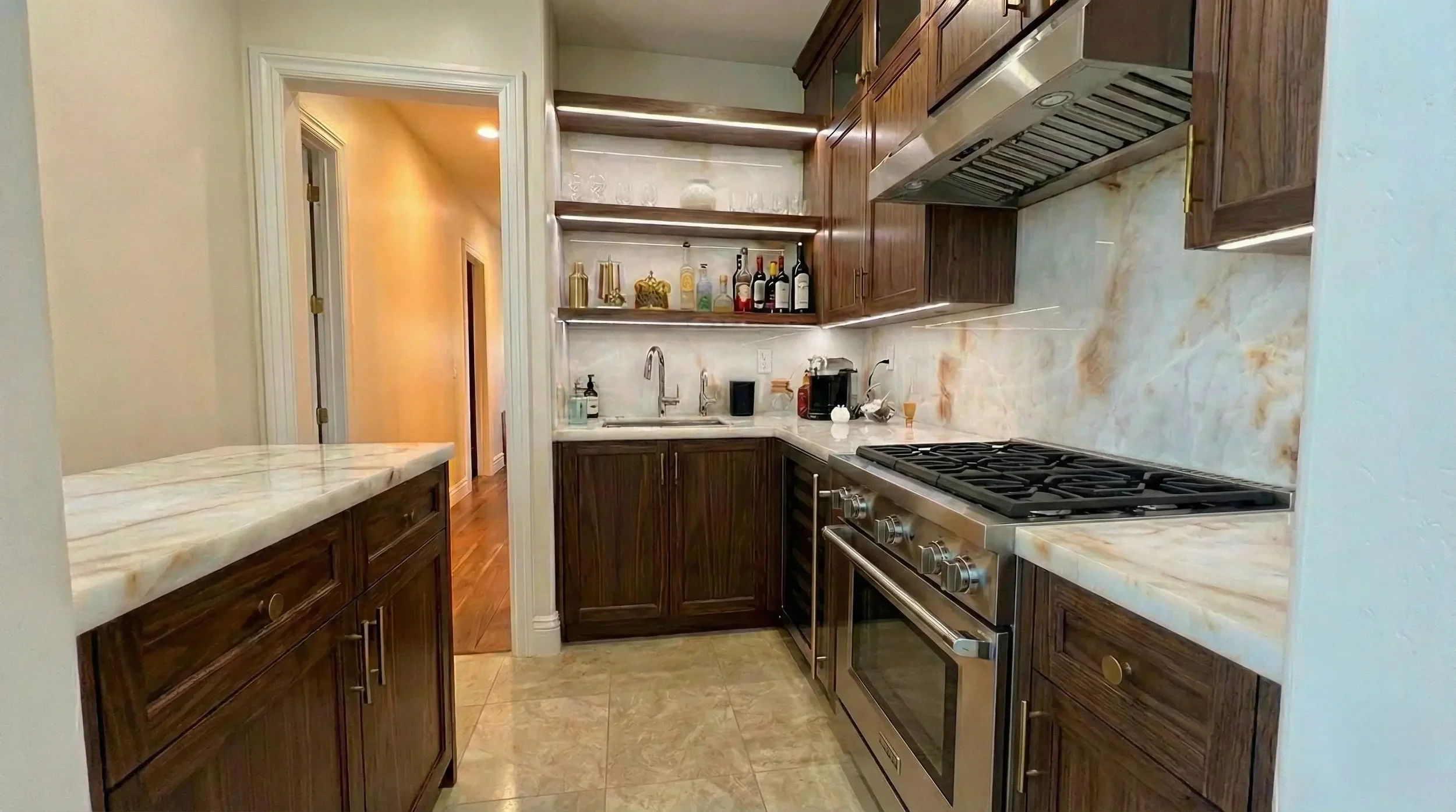
Custom cabinetry is especially beneficial in small kitchens because tailored designs can address unique dimensions and maximize storage potential more effectively than standard sizes. At Knotty Nuff Wood, every project begins with precise measurements and a deep understanding of each homeowner’s lifestyle.
Custom solutions include:
Corner cabinets with premium hardware
Slim pull-outs designed to fit narrow spaces
Custom-sized drawers for maximum accessibility
Built-in organizers that match your exact storage needs
Knotty Nuff Wood’s craftsmanship ensures durability, seamless design, and premium material selection. Their team focuses on blending functionality with aesthetics, ensuring that even the smallest kitchen feels polished and purposeful.
Every Knotty Nuff Wood small kitchen cabinet is crafted to make the most of your space without compromising style.
How to Choose the Best Small Kitchen Cabinet Ideas for Your Home
When selecting the right solutions for your kitchen, consider the following:
Assess your layout: Different configurations — galley, L-shaped, U-shaped, or kitchenette — benefit from specific cabinet strategies.
Identify storage priorities: Determine whether you need more space for cookware, pantry items, or small appliances.
Consider accessibility and ergonomics: Choose features that make daily cooking easier.
Match design with your home: Cabinets should harmonize with the home’s architecture and overall décor.
Working with a professional ensures that ideas are translated into durable, efficient, and attractive cabinetry.
Conclusion
Innovative small kitchen cabinet ideas can transform even the most compact kitchens into spaces that are functional, stylish, and enjoyable to use. From vertical storage to corner solutions, pull-out systems, and custom craftsmanship, each strategy enhances efficiency and organization.
If you’re ready to optimize your small kitchen, Knotty Nuff Wood offers tailored cabinetry solutions designed to fit your space perfectly. Their team combines expert design, high-quality materials, and precision craftsmanship to elevate every inch of your kitchen.
Ready to upgrade your small kitchen? Contact Knotty Nuff Wood for custom cabinetry solutions designed to fit your space perfectly.