
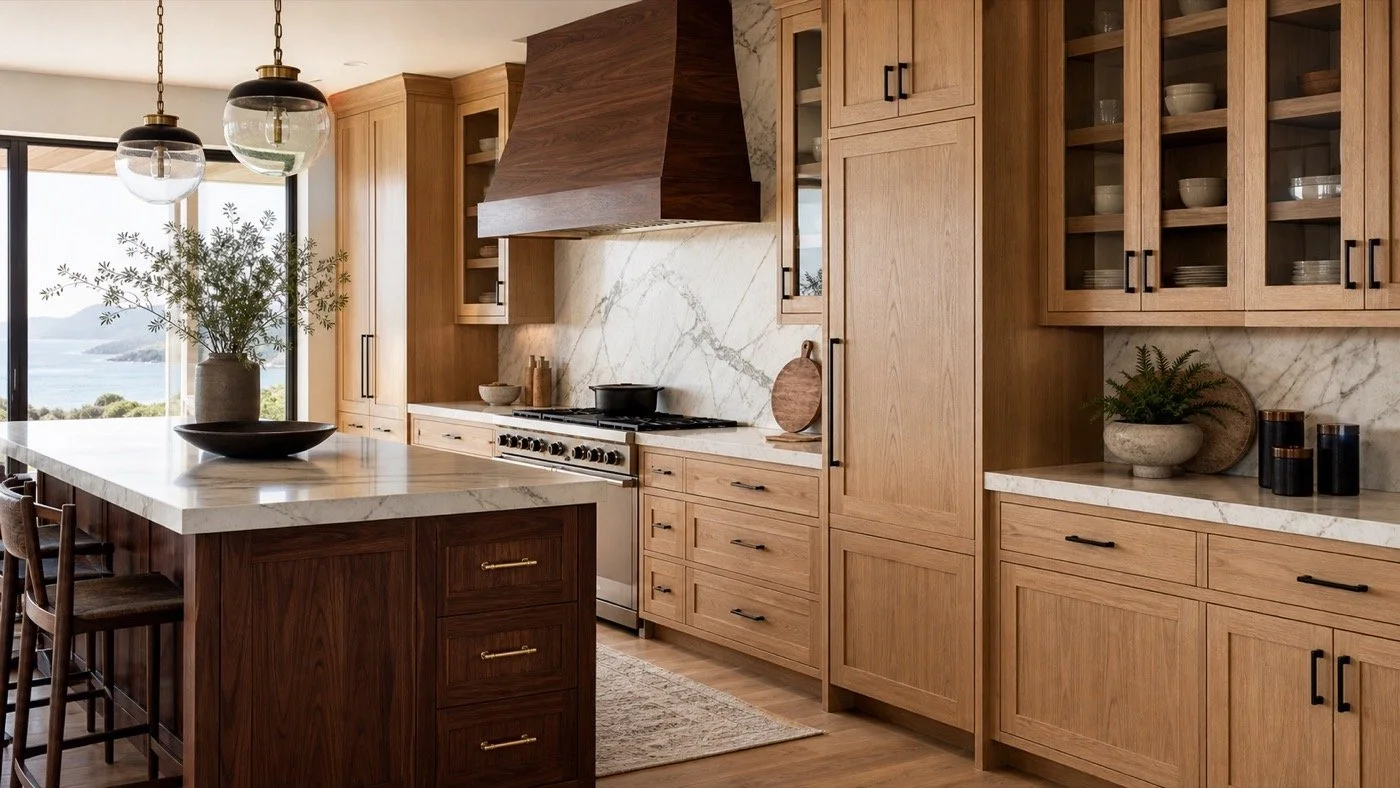
Two white oak kitchens can look completely different depending on cut and finish. Flat-sawn boards with a warm stain create more movement, while rift-sawn panels with a natural matte finish read cleaner and more architectural. That is why choosing wood species for cabinets should happen before the finish schedule is treated as final.
For homeowners planning custom cabinets, this is where the material conversation becomes important. Stock lines may offer a short list of finishes, but custom work allows the species, cut, stain, sheen, and construction details to be selected around the room. The goal is to choose a material that supports the design, performs well in daily use, and still feels right years after the project is complete.
Why Wood Species Matters in Custom Cabinetry
Different types of wood for cabinets behave differently. Some have bold grain and visible movement. Some are tight-grained and calm. Some accept stain evenly, while others are stronger when their natural color is allowed to lead.
Wood species also affects how a cabinet feels in daily use. A kitchen with heavy traffic needs a species and finish schedule that can handle repeated contact. A formal library or wine room may call for a richer, more expressive hardwood. A painted cabinet project may benefit from a smoother substrate that keeps the finish refined.
The species decision influences:
Grain pattern and visual movement
Natural color and how it changes over time
Stain, paint, and clear-coat performance
Door style compatibility
Durability in active rooms
Budget and material availability
How the cabinetry relates to flooring, stone, tile, and furniture
The right wood for custom cabinets is the one that supports the design intent and the way the room will actually be used.
White Oak Cabinets
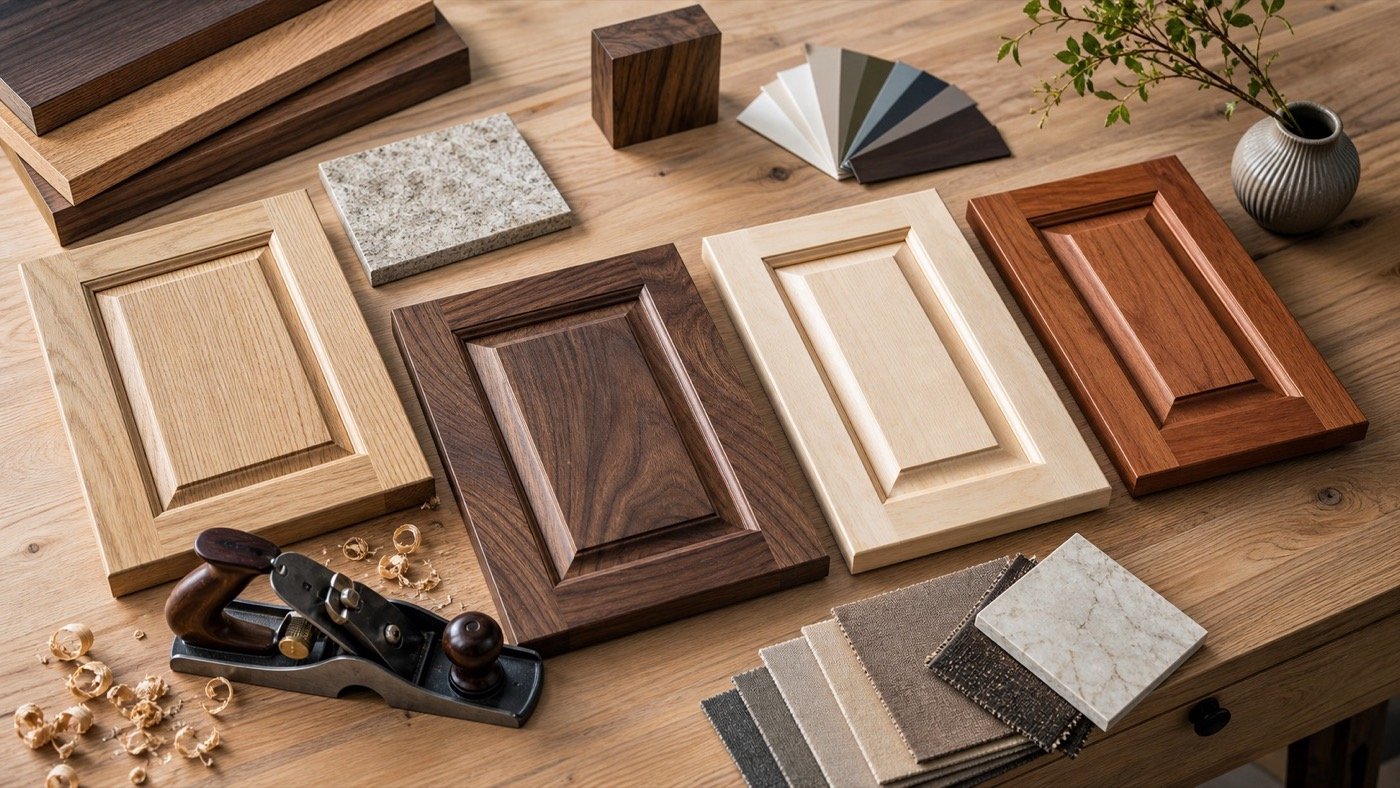
White oak is commonly specified for premium custom cabinetry because it balances warmth, structure, and restraint. It has enough grain to feel natural and crafted, but it does not usually overwhelm a room when the door style and finish are handled well.
White oak works especially well in kitchens, built-ins, vanities, and entertainment walls where the homeowner wants natural wood without a heavy traditional look. It can read modern, transitional, coastal, or classic depending on the cut and finish.
Rift-sawn and quarter-sawn white oak are often used when a cleaner, more linear grain is desired. Flat-sawn white oak has more movement and can feel more rustic or casual. The USDA also summarizes commercially important wood characteristics, including the way appearance, grain, and finishing behavior influence material selection.
White oak is a strong choice for homeowners who want:
A natural wood look with a refined grain pattern
Light to medium warmth without a yellow-heavy tone
A durable hardwood for kitchens and daily-use cabinetry
A finish that pairs well with stone, plaster, bronze, black hardware, and soft neutral palettes
For coastal homes and high-end remodels, white oak often gives cabinetry the right balance of warmth and calm.
Walnut Cabinets
Walnut brings depth, richness, and a clear sense of luxury to custom cabinetry. It is known for its brown tone, darker grain, and furniture-like presence. In the right room, walnut can make cabinetry feel architectural rather than purely functional.
Because walnut is visually strong, it is often used strategically. A full walnut kitchen can carry a rich, furniture-grade presence, but walnut can also be used for an island, bar, office, built-in, vanity, or accent wall. Pairing walnut with painted perimeter cabinets or lighter stone can create contrast without making the room feel heavy.
Walnut works well when the design calls for:
A rich, premium wood tone
A furniture-grade feel
Strong contrast against lighter finishes
A custom island or built-in that should become a focal point
Walnut also rewards careful finish work. A clear or lightly toned finish usually allows the wood to stay expressive, while too much stain can flatten the natural variation that makes walnut desirable in the first place.
Hard Maple Cabinets
Hard maple has a tighter, smoother grain than oak or walnut. It is often used when the goal is a clean painted finish or a lighter natural appearance. Because it is dense and smooth, maple can be a practical option for cabinets that need a crisp, controlled look.
For painted cabinetry, maple is often considered when the homeowner wants a refined surface and less visible grain telegraphing through the paint. It can work well for kitchen perimeters, vanities, closets, laundry rooms, and other spaces where a smooth finish is a priority.
Maple is also useful when the design calls for a lighter wood tone without the pronounced grain of oak. It does not have the same open character as white oak, but that calm surface can be exactly the point in a modern or transitional project.
Cherry Cabinets
Cherry has a more traditional association, but it remains a premium hardwood when used deliberately. It has a smooth grain and warm color that typically deepens with light exposure and oxidation. Because areas covered by hardware or accessories may age differently, that color change should be considered before the final design is approved.
Cherry can work well in libraries, offices, formal dining built-ins, bars, and traditional kitchens where warmth and depth are desired. It may not be the first choice for every modern coastal project, but in the right setting it has a mature, furniture-quality presence.
Homeowners considering cherry should think carefully about:
How much natural darkening they are comfortable with
Whether the home already has warm flooring or trim
How the cabinet finish will pair with stone, wall color, and lighting
Whether the room benefits from a more classic wood tone
Cherry is not a neutral background material. It is a design decision, and that is where custom cabinetry gives it room to succeed.
Specialty and Exotic Wood Options
Some projects call for specialty woods beyond the most common cabinet species. Depending on the design, availability, and budget, a custom shop may explore options such as sapele, mahogany, ash, alder, or carefully sourced exotic veneers. The USDA Forest Products Laboratory's Wood Handbook is a useful reference for understanding how moisture, density, and physical properties affect wood performance.
These materials can be appropriate for accent cabinetry, statement bars, wine rooms, furniture pieces, powder rooms, or architectural built-ins. They can also add cost and sourcing complexity, so they should be selected for a clear design reason rather than novelty alone.
When specialty species are being considered, the conversation should include:
Availability and lead time
Matching between doors, panels, and exposed ends
Sustainability and sourcing
Finish testing before full production
Whether solid wood, veneer, or a combination is the right construction method.
Solid wood and wood veneer serve different purposes in fine cabinetry. Solid wood is commonly used for frames, doors, and details, while veneer over an appropriate panel substrate can provide consistent grain across broad surfaces. The right construction may use either material, or both, depending on the component, grain direction, and finish.
A premium material only works when the design, construction, and finish plan support it.
Grain, Cut, and Finish Make the Difference
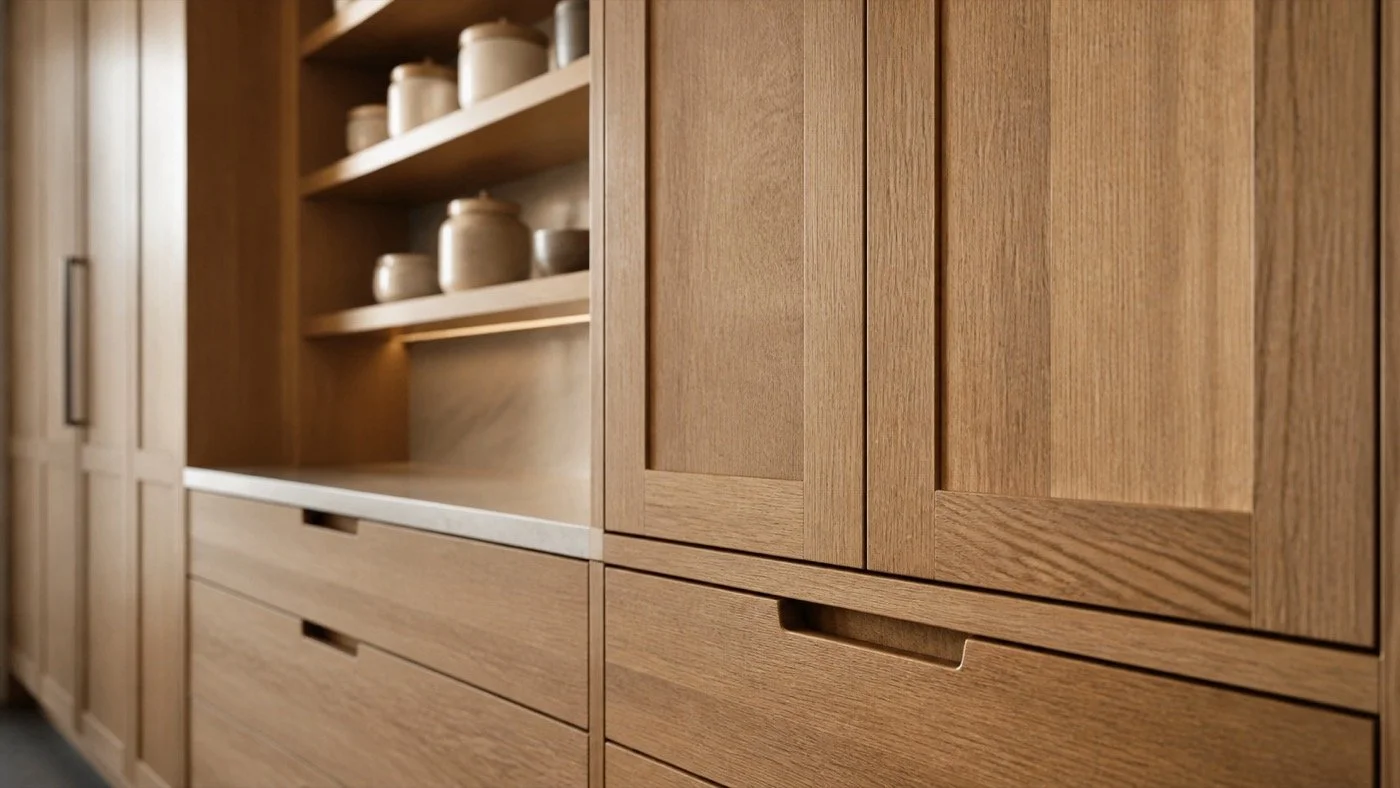
Species is only the starting point. The final look depends heavily on the way the wood is cut and finished. That variation comes from decisions made after the species is selected.
Cut affects the grain pattern:
Flat-sawn boards usually show more cathedral grain and movement.
Rift-sawn boards create a straighter, more linear grain.
Quarter-sawn boards can show distinctive figure and may offer greater dimensional stability across the board's width than flat-sawn boards.
Finish affects tone, sheen, and protection. A clear coat may preserve the species' natural character. A stain can deepen or shift the color. A painted finish can hide most grain and make door style, proportions, and surface preparation more important. Homeowners comparing finish direction may also find the guide to light vs. dark kitchen cabinets useful.
This is why samples matter. Before moving forward, homeowners should see physical samples in the actual room when possible. Lighting, flooring, countertop material, and wall color can all change how a wood species appears.
Wood naturally responds to changes in moisture. Species, board cut, panel construction, acclimation, and finish should therefore be reviewed together, especially in coastal homes or rooms with changing humidity. A finish helps protect the surface, but it does not make wood immune to movement.
Matching Wood Species to the Room
The right cabinet species depends on the space. Kitchens need durability and cleanability. A home office may prioritize warmth and furniture character. A closet may need a mix of finish clarity and efficient built-in storage. A living room built-in has to coordinate with furniture, flooring, and architectural trim.
For homeowners comparing hardwood cabinets, it helps to start with the room's role:
Kitchens: durable species, protected finishes, and grain patterns that can handle large cabinet runs
Islands: stronger contrast options such as walnut or stained white oak
Built-ins: species that coordinate with flooring, shelving, media equipment, and nearby furniture
Vanities: materials and finishes that tolerate moisture when properly built and finished
Closets: clean species or painted finishes that keep the storage system bright and organized
Custom cabinetry allows each room to be designed around its use instead of forcing one finish across every cabinet in the home.
How Knotty Nuff Wood Helps Homeowners Choose
Knotty Nuff Wood builds custom woodwork for homeowners who want the cabinetry to fit the home, not the other way around. The process includes measurements, design planning, material conversations, fabrication, finishing, and installation details.
For projects in Orange County, Los Angeles County, and Monterey County, wood selection is handled with the whole room in mind. That includes cabinetry layout, door style, grain direction, finish samples, countertop pairings, hardware, and the way the space will be used every day.
Premium wood species should make the finished cabinetry feel intentional. The right choice should support the architecture, hold up to the room's demands, and give the homeowner a result that feels crafted rather than generic.
Conclusion
Choosing a premium wood species for custom cabinets affects design, performance, and craftsmanship. White oak, walnut, maple, cherry, and specialty species can all be strong choices when they are matched to the right room, construction method, and finish plan.
If you are planning custom cabinetry for a kitchen, built-in, closet, office, or specialty space, Knotty Nuff Wood can help you compare wood species, review finish samples, and design cabinetry that fits the way your home should look and function.
Ready to choose the right wood species for custom cabinets? Contact Knotty Nuff Wood for custom cabinetry solutions tailored to your home.