
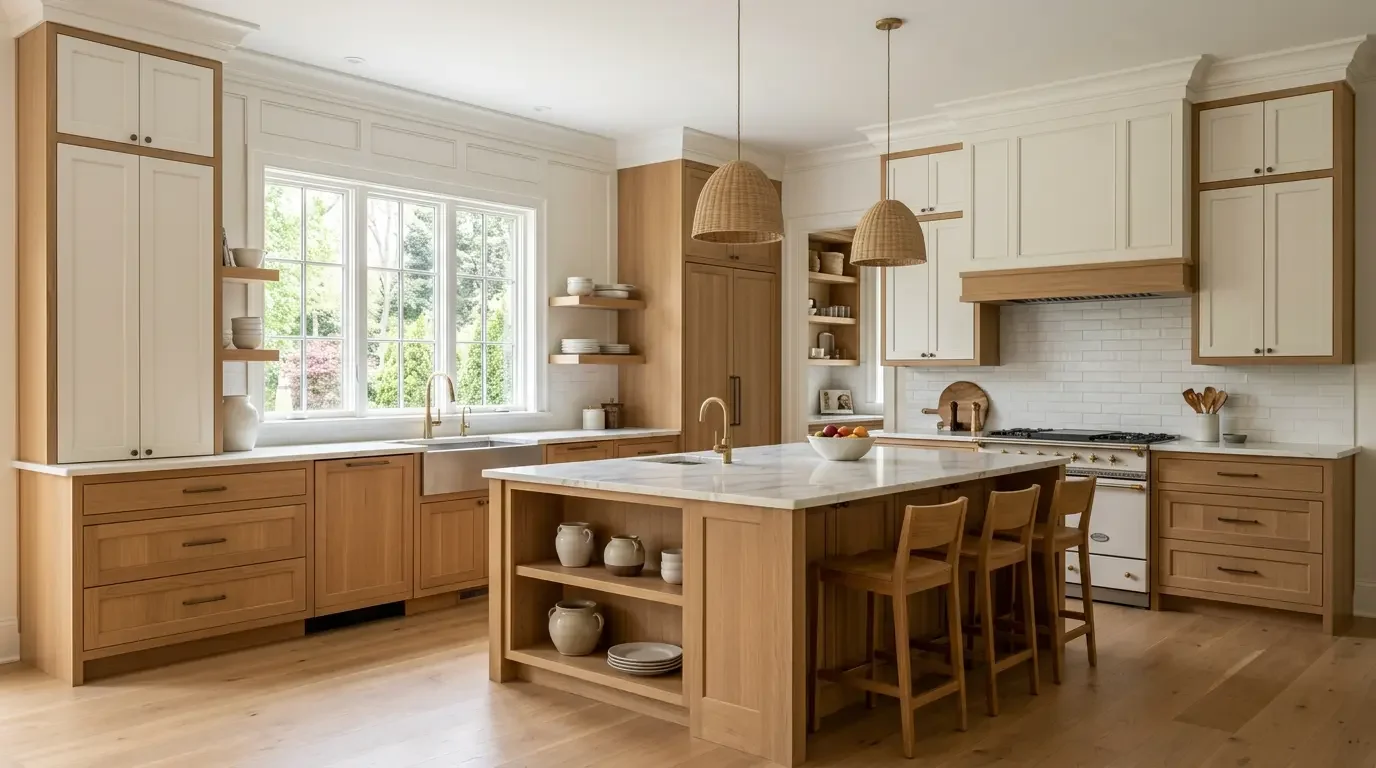
A custom cabinet installation is won or lost long before the cabinetry ever arrives. The decisions made in planning, accurate measurement, material selection, site preparation, and scheduling, are what determine whether the finished result fits seamlessly and functions for years. Homeowners who understand how a custom cabinet installation comes together tend to make sharper decisions and run into far fewer surprises along the way.
Custom cabinetry earns its value through precision. Unlike stock or modular systems, every component is built for one specific space, which is the entire advantage. It also means the outcome depends on careful planning rather than off-the-shelf flexibility. A single miscalculated dimension or an overlooked utility line carries more weight when each piece is made to order, so the planning stages deserve real attention.
This guide walks through how to plan a custom cabinet installation, from the initial assessment to the final fitting, so the process runs smoothly and the result performs over the long term.
Start With an Accurate Assessment of the Space
Every custom cabinet project begins with understanding the room as it exists. This means documenting dimensions, but it also means identifying the conditions that affect how cabinetry can be built and installed.
Factors to assess before design begins:
Wall and floor conditions: Out-of-square walls and uneven floors are common and influence how cabinets must be scribed and leveled.
Utility locations: Plumbing, electrical, gas, and ventilation lines determine where cabinets can sit and where cutouts are needed.
Ceiling height and obstructions: Soffits, beams, and sloped ceilings affect upper cabinet design and clearances.
Existing architecture: Windows, doorways, moldings, and trim all shape how cabinetry meets the surrounding space.
A thorough assessment at this stage prevents redesign later. Custom cabinetry is built to the measurements taken here, so accuracy directly affects fit. Professional measurement accounts for the irregularities that homeowners often overlook, which is why field measurement is treated as a distinct step rather than a quick check.
Define Function Before Finalizing Design
Custom cabinets are most valuable when they are designed around how the space will actually be used. Before settling on appearance, it helps to define the functional requirements the cabinetry needs to meet.
A kitchen project might prioritize a custom pantry cabinet with pull-out shelving, dedicated appliance storage, or organized drawer systems for cookware. A home office or living area might call for a custom storage cabinet configured for files, equipment, or display. Defining these needs early ensures the interior of each cabinet is planned with purpose rather than filled in after the fact.
Function also informs decisions that are difficult to change later. Drawer placement, shelf adjustability, integrated lighting, and specialized compartments are far simpler to incorporate during design than to retrofit after installation. Homeowners benefit from listing daily frustrations with their current storage so the new cabinetry resolves them directly.
Select Materials and Finishes
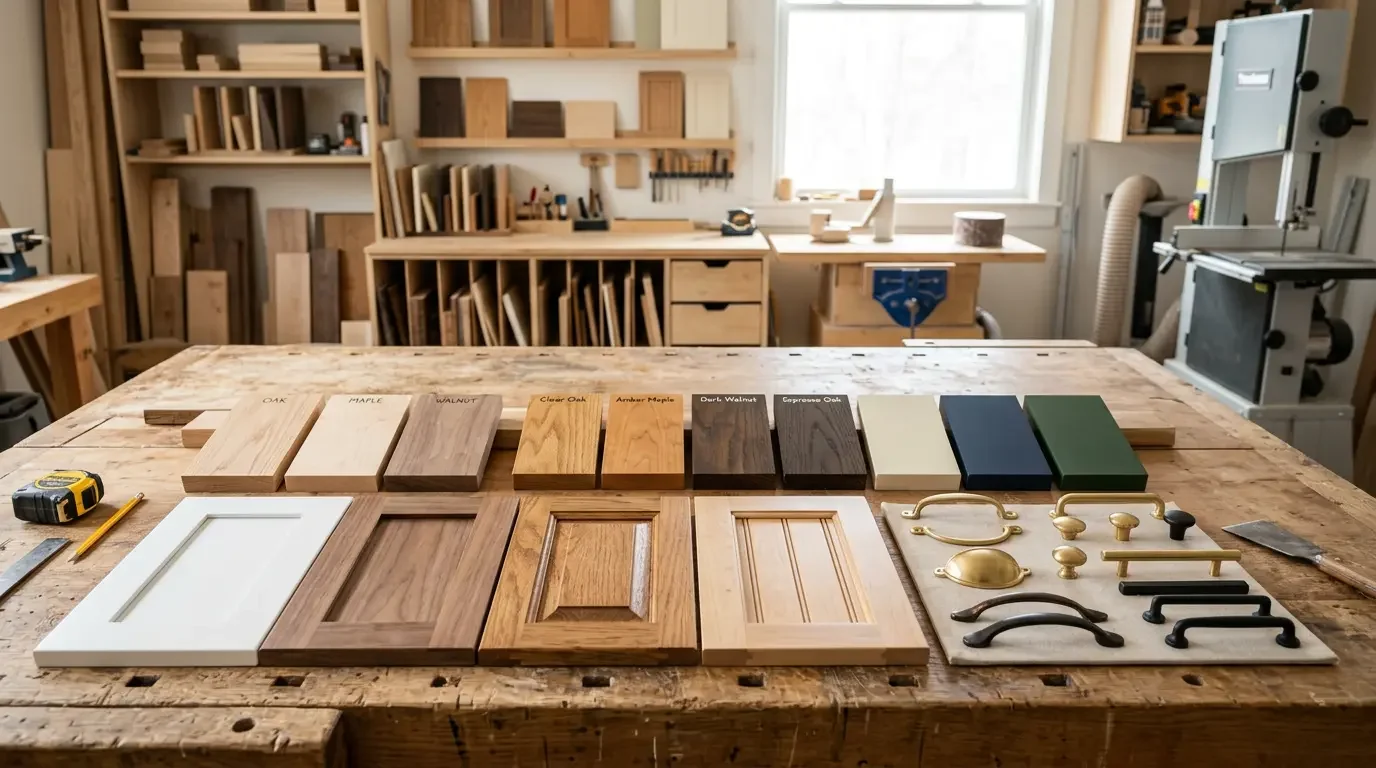
Material and finish choices affect durability, appearance, and budget, and they should be settled before fabrication begins. Solid hardwoods such as oak, maple, and walnut offer strength and character, while quality plywood cores provide stable cabinet boxes that resist the swelling common with particleboard.
Decisions made at this stage include:
Wood species: Balances grain, color, durability, and cost.
Finish type: Stained, painted, or natural finishes, each with different maintenance and durability characteristics.
Door style: Inset, full overlay, or partial overlay, including custom kitchen cabinet doors with specified profiles.
Hardware: Hinges, slides, and pulls selected for both function and appearance.
Finish quality matters as much as material. Durable topcoats resist scratches, moisture, and staining, extending the functional life of the cabinetry. Coordinating finishes across all components creates the visual consistency that distinguishes a custom installation from an assembled one.
Prepare the Space for Installation
Site preparation reduces delays and protects both the home and the new cabinetry. In most projects, existing cabinetry is removed and the space is cleared before installation begins. Any required work on walls, flooring, plumbing, or electrical is best completed beforehand so installation is not interrupted.
Coordination matters when a project involves multiple trades. Countertop templating, for example, typically follows base cabinet installation, so scheduling must account for the sequence. Aligning these steps in advance prevents the gaps that extend a project unnecessarily.
Clearing access routes also supports a clean installation. Cabinetry built in a shop must be transported into the home without damage, so protecting floors, doorways, and finished surfaces along the path is a practical part of preparation. A maker who plans this logistics step reduces the risk of damage during fitting.
Understand the Installation Process
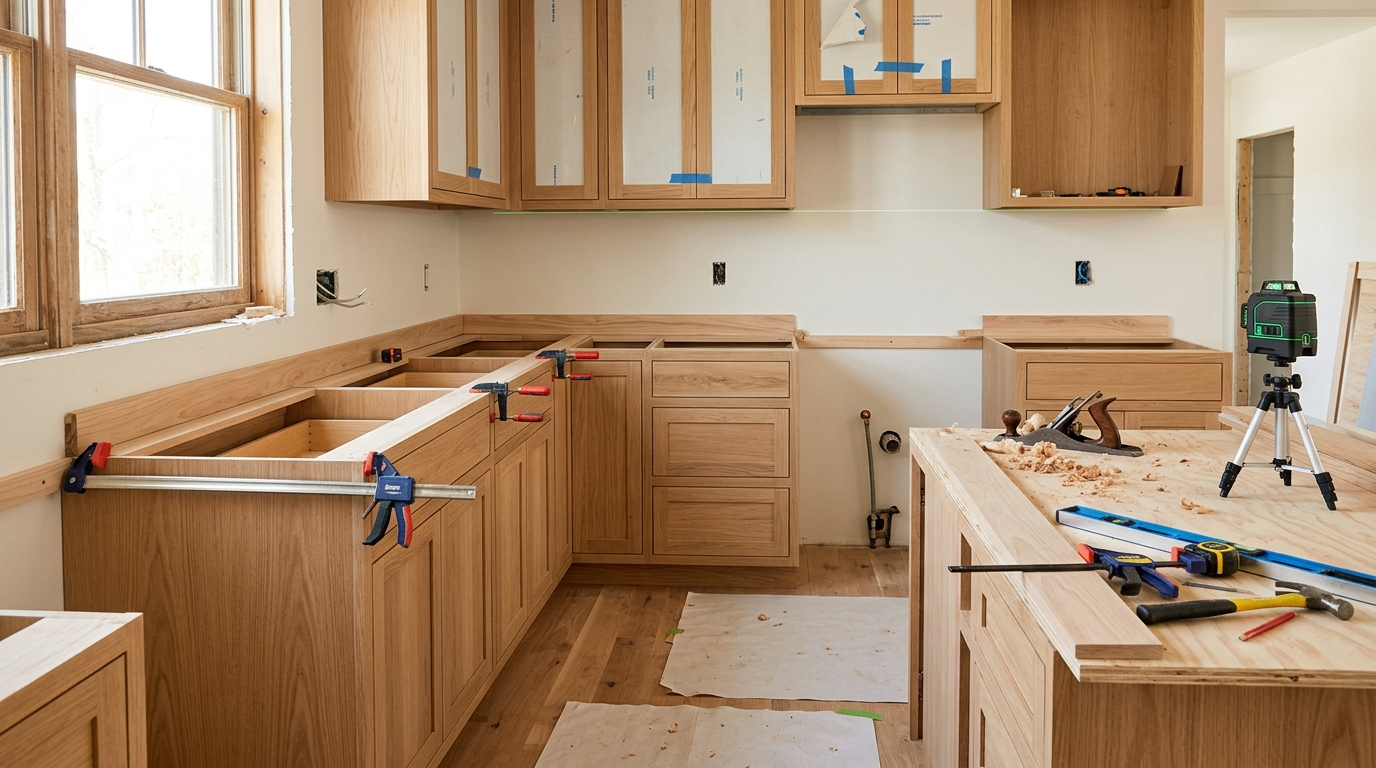
Custom cabinet installation follows a defined sequence. Base cabinets are positioned, leveled, and secured first, with shims and scribing used to compensate for uneven floors and walls. Upper cabinets follow, aligned to consistent heights and secured to wall framing.
Once boxes are set, doors, drawers, and hardware are adjusted for consistent alignment and smooth operation. Filler pieces, scribe moldings, and trim close the gaps between cabinetry and surrounding architecture, producing the seamless appearance that custom work is known for. This finishing detail is where precision becomes visible.
Final adjustments ensure every door closes squarely and every drawer runs true. A careful installation accounts for these details rather than treating them as afterthoughts, because they determine how the cabinetry performs day to day over the years that follow.
Custom Cabinet Installation by Knotty Nuff Wood
Knotty Nuff Wood handles custom cabinet projects from initial consultation through final installation. Each project begins with a detailed assessment of the space, the household's storage needs, and the design vision, followed by exact field measurements that guide fabrication.
Cabinetry is built in the Santa Ana workshop, where controlled conditions support precise joinery and durable finishes. Installation is planned to protect the home and to fit the cabinetry cleanly against existing architecture, with the scribing, leveling, and trim work that a seamless result requires. Knotty Nuff Wood serves homeowners across Orange County, Los Angeles County, and the Newport Beach coast.
The result is custom cabinetry installed to perform and to read as an integrated part of the home.
Conclusion
Planning a custom cabinet installation comes down to accuracy and sequence. An honest assessment of the space prevents redesign. Defining function before appearance ensures the cabinetry works the way the household needs it to. Material and finish decisions made early support durability and a cohesive look. Site preparation and a well-managed installation sequence turn careful planning into a precise result.
Get those stages right and the payoff is a kitchen, pantry, or storage space that feels built for the home rather than fitted into it. That is the standard custom work is meant to reach, and thoughtful planning is what gets it there.
Ready to plan a custom cabinet installation? Contact Knotty Nuff Wood for custom cabinetry tailored to your home.